Raceboard courses demand more than one strength. The upwind leg is where races start — early planing, clean pointing, holding position off the line. The reaches are where they're shaped — drive, control, and the ability to stay composed when the pressure builds. The run is where they're decided.
A board that excels upwind but gives back time on the reach has already chosen a result for you.
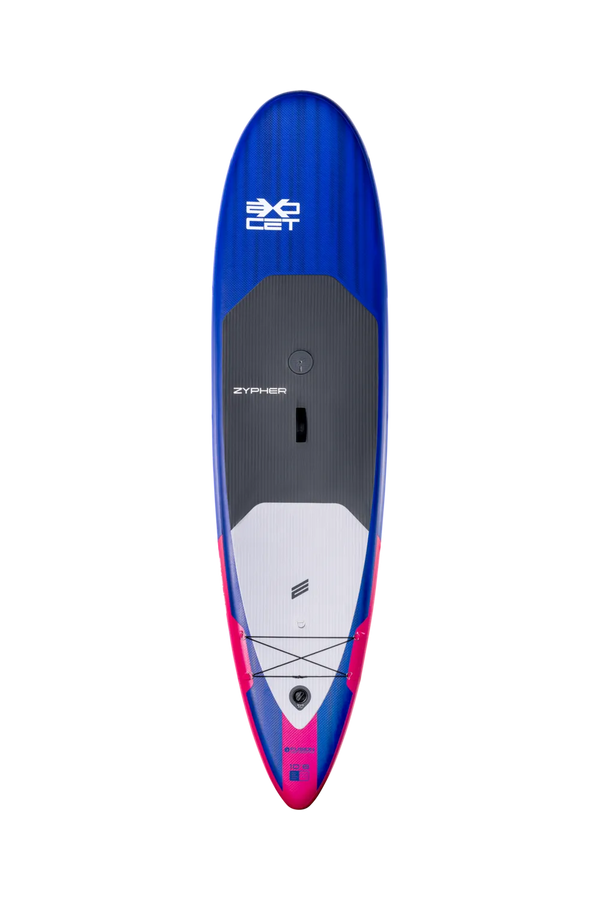
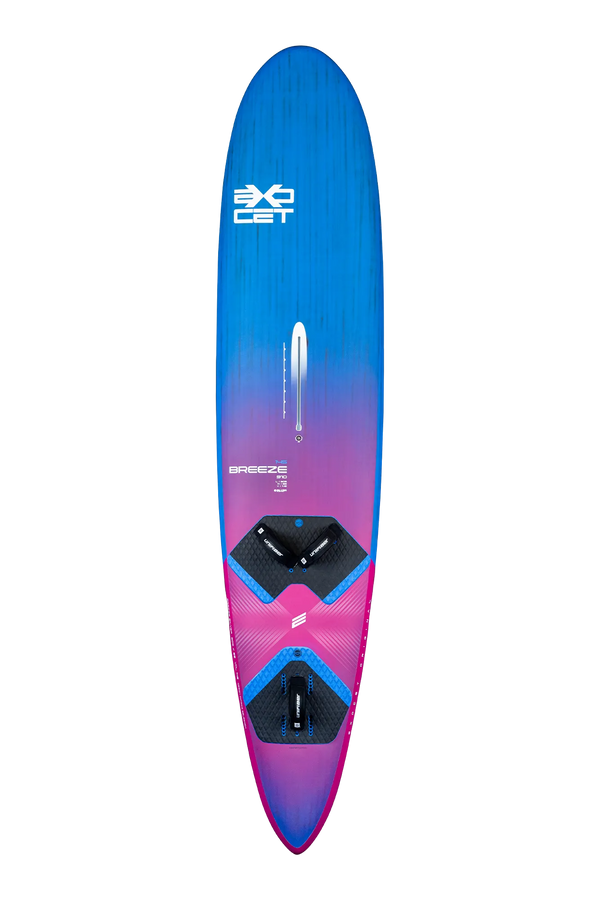
The RS V7 Carbon 380 was developed by Exocet's raceboard team — Marcos Ruesch, Curro Manchon, and Patrice Belbeoc'h — to perform across all of them. Building on earlier concepts including the Unifiber Proteus hull, the aim was a board capable of exceptional upwind speed without conceding performance on the reaches and the run.
Volume Re-Tuned for Every Sailor
Where earlier iterations often favoured heavier sailors upwind and lighter sailors downwind, the RS V7 380 distributes volume carefully at bow and stern to accommodate a wider sailor weight range. Heavier sailors reach planing speed earlier in marginal breeze; lighter sailors maintain better control and pointing ability upwind without fighting the shape.
The Pivot System
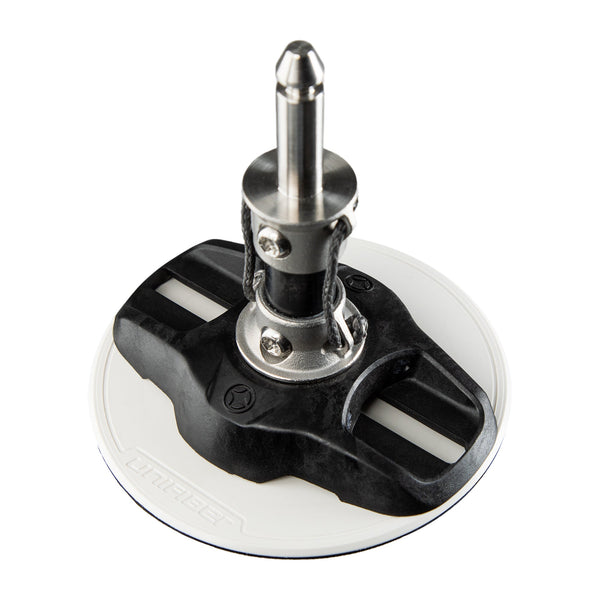
The daggerboard retains Exocet's Pivot System, allowing both length and angle to be adjusted to conditions before and during a race. A longer blade delivers extra lift and pointing power on light-wind upwind legs; retracted, it reduces drag and improves control when the pressure builds on the reaches. The housing is designed to accept custom daggerboards, giving sailors the flexibility to dial in their preferred configuration for the course and conditions.
Balanced on Every Reach
Both the daggerboard and mast track are positioned forward to optimise balance across all points of sail. A subtle forward shift of the fin box enhances drive on the reaching legs — where race positions are frequently won and lost — without compromising the upwind setup.
Direct from Sailor to Hull
On a raceboard, the margin between a good result and a great one often comes down to feel — the ability to sense subtle changes in trim and respond before they cost you. Carbon Sandwich construction keeps weight low while preserving the structural stiffness needed to transmit those inputs without filtering them. The RS V7 380 doesn't interpret what the sailor does — it delivers it directly to the water.
A raceboard developed by the people who race it, refined around the parts of the course where results are actually made.